
Boundary decisions in therapy are rarely simple.
Most clinicians are taught that dual relationships should be avoided whenever possible. But in real practice, especially in smaller communities, online spaces, and overlapping social networks, boundaries are often more complex than textbooks suggest. Therapists may find themselves wondering: • Is this a boundary crossing or a boundary violation? • What happens if I see a client in my community? • Can I engage with clients on social media? • How do regulators view these situations? These questions can feel ambiguous and stressful. This course was created to help clinicians approach boundary decisions with greater clarity, ethical reasoning, and professional confidence.
Inside this Course
This course explores how therapists can navigate dual relationships thoughtfully and responsibly. You will learn how to: • distinguish between boundary crossings and boundary violations in clinical practice • recognize the unique challenges of dual relationships in rural and small-community settings • understand ethical and legal risks related to social media engagement • apply practical tools for navigating boundary situations while maintaining ethical integrity • understand how ethical codes, regulatory rulings, and case law inform boundary decisions
Course Curriculum
-
1
-
(Included in full purchase)
A Friendly Introduction: Dual Relationships in Small Worlds and Social Media
-
Learning Objectives Free preview
-
(Included in full purchase)
-
2
-
(Included in full purchase)
What is a dual relationship?
-
(Included in full purchase)
What is the difference between a boundary crossing and a boundary violation?
-
Interactive Poll: Boundary Crossing or Violation? Free preview
-
(Included in full purchase)
Interactive Poll Discussion
-
(Included in full purchase)
-
3
-
(Included in full purchase)
Review of Relevant Ethical Codes
-
(Included in full purchase)
How Intention, Power dynamics, and Context Matter
-
(Included in full purchase)
⚖️ Betti’s Legal Lens on Intention, Power, and Digital Practice
-
(Included in full purchase)
Best Practices for Digital Boundaries
-
(Included in full purchase)
-
4
-
(Included in full purchase)
Ethical Decision-Making Model and Step 2 Cheat Sheet
-
(Included in full purchase)
1. A former client applies for a job at your spouse’s business
-
(Included in full purchase)
2. A client’s parent messages you on Facebook
-
(Included in full purchase)
3. You’re the only clinician in a remote town, and your new client is a fellow parent at your child’s school
-
(Included in full purchase)
⚖️ Dual Relationships Create Legal Risk
-
(Included in full purchase)
-
5
-
(Included in full purchase)
QUIZ: Dual Relationships in Small Worlds & Social Media
-
(Included in full purchase)
-
6
-
(Included in full purchase)
Final thoughts from Becky + Betti
-
(Included in full purchase)
Further Reading & Resources
-
(Included in full purchase)
Course Reflection & Learning Feedback
-
(Included in full purchase)
CE Credits: Instructions for certificate, self-reflection question, and CE logging
-
(Included in full purchase)
Let This Be the Beginning, Not the End
-
(Included in full purchase)
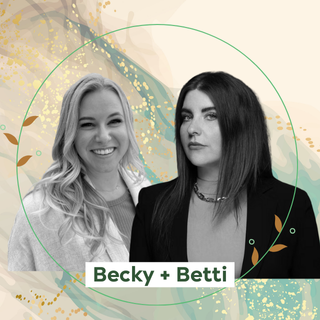
Why this course is different
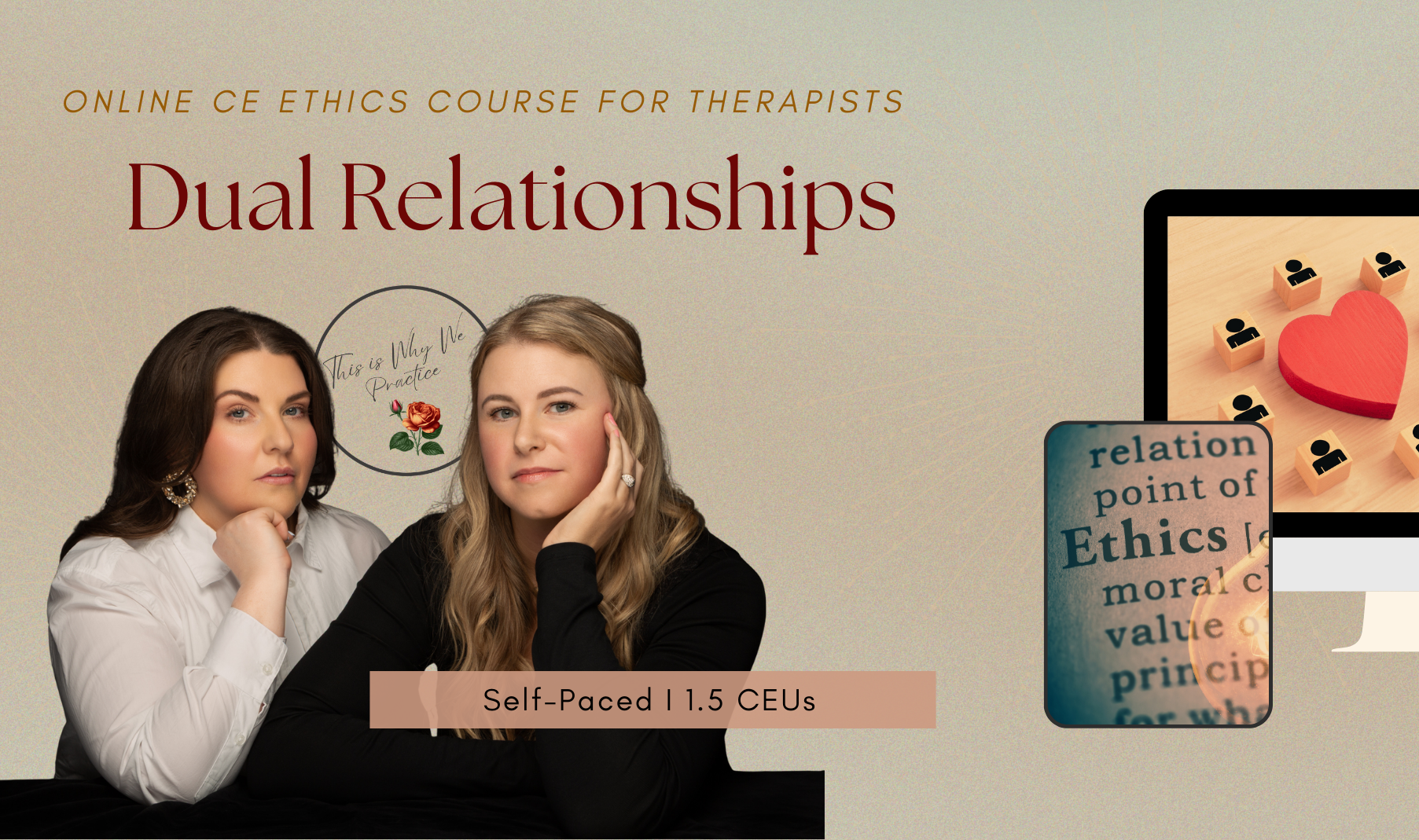
A therapist and a lawyer teaching together Dual relationship dilemmas often sit at the intersection of clinical ethics and legal risk. In this course, a therapist and a family lawyer explore boundary situations together. You’ll gain insight into: • how clinicians experience boundary dilemmas in practice • how regulators and legal processes interpret these situations • how to approach boundary decisions thoughtfully rather than defensively Becky Palmer is a Registered Clinical Counsellor and clinical lead of a large group practice who regularly supports clinicians through consultation, documentation review, and ethical decision-making. Betti White is a family lawyer who works at the intersection of law and therapeutic practice, helping professionals understand legal implications of ethical decisions. Together they explore how clinical judgment and legal considerations intersect in boundary dilemmas.
Who this course is for
This course is designed for therapists who: • work in smaller communities or overlapping social networks • encounter boundary questions regularly in clinical work • want more clarity about dual relationships and ethical decision-making • supervise or support other clinicians • want an ethical decision making framework
What this course is NOT
This course is not about: • rigid rules that apply to every situation • fear-based or defensive practice • avoiding all human contact with clients Instead, the focus is thoughtful boundary decision-making grounded in ethical principles.
Common Questions
Are dual relationships always unethical? Not necessarily. Ethical decision-making often depends on context, power dynamics, and potential harm. ⸻ Is this course only relevant for rural therapists? No. Dual relationship dilemmas also arise in urban settings, especially through social media and overlapping professional networks. ⸻ What if I already understand basic boundary concepts? Many clinicians take this course to deepen their understanding of how boundary decisions are interpreted by regulators and courts. ⸻ CONTINUING EDUCATION Upon completing this course, participants will receive a Certificate of Completion for 1.5 CEU hours, which may be submitted to their accrediting body where applicable. ⸻ Therapists often take this course when they are asking: • “Is this a boundary crossing or a violation?” • “What happens if I see a client in my community?” • “Can I respond to a client on social media?” • “How do regulators actually view these situations?” If you want a clearer understanding of how to navigate dual relationships while maintaining both ethical integrity and professional judgment, this course was created to support that process.
$125.00
Join us.
Disclaimer: This course is intended for informational and educational purposes only. It does not constitute legal advice, clinical advice, or formal supervision. Participation in this course does not create a supervisory, clinical, or legal relationship. For matters requiring legal counsel, clinical judgment, or professional supervision, participants are encouraged to consult a qualified lawyer, clinical supervisor, or regulatory body. We are not affiliated with any regulatory college, association, or governing body. The views expressed in this course are solely our own and reflect our personal and professional perspectives. While we aim to align with ethical best practices, participants should always refer to their own professional standards, codes of ethics, and licensing requirements when applying course content to their work.